
 Contact
 Menu
Menu Corporate
 Products


 Application Areas


 Sectors


 Representations





 Media & Press
 Contact
 Contact Information
Laboratory refrigerators and freezers; good storage practices of biological materials, are a fundamental component of any laboratory. Biological samples usually degrade over time when stored at room temperature, but some samples may also lose their integrity at low temperatures if subjected to multiple freeze-thaw cycles. The best storage temperature for a particular biological sample, cell, or reagent generally depends on the type of biological material, the solution in which it is suspended, the intended use of the sample, and how long the material needs to be stored. The most common storage temperatures are room temperature, cold, freezer, deep freezer, ultra-low freezer, and cryogenic freezer storage.
- +2 to +8°C refrigerators,
- -20 °C freezers,
- -30 °C freezers,
- -40 °C deep freezers,
- -60 °C deep freezers,
- -86 °C ultra-deep freezers,
- -150°C cryogenic deep freezers
- -190°C cryogenic deep freezers
- LN2 Sample Storage Tanks
Users should choose their refrigerator or freezer preference by considering the appropriate storage temperature for their samples.
Medical Refrigerator (+2°C / +8°C):
They are used in laboratories to store stock solutions, enzymes, antibodies, chemicals, kits, biological materials, DNAs, and PCR products at stable temperatures. They are also used for the timed storage of vaccines. The safest power source should be chosen for storing vaccines. Household refrigerators are not specially designed for vaccine storage and therefore are not recommended by WHO (World Health Organization).
Refrigerators between +2 and +8°C, -20 °C freezers, -30 °C freezers, -40 °C freezers, and -60 °C freezers also have household-type alternatives. There are key differences between these refrigerators and freezers and household types;
- They have advanced alarm functions,
- Less temperature fluctuations (due to better and thicker wall and door insulation, they are less affected by ambient temperature),
- High temperature stability.
Optional temperature–alarm monitoring systems can also be added to these devices. In this way, devices can be monitored remotely via phone or tablet.
For temperature-sensitive samples such as vaccines, temperature fluctuations and stability inside the device are very important. Unacceptable temperature differences can render samples unusable.
The temperature in every point of a refrigerator is not the same, and the temperature at the same point can vary during daily operation cycles. Therefore, users cannot use household refrigerators. Also, users must be very careful when selecting laboratory refrigerators.
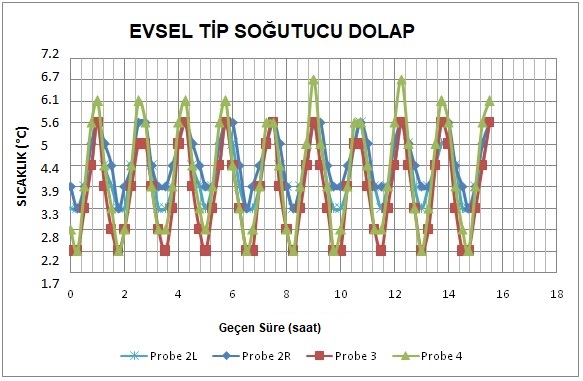
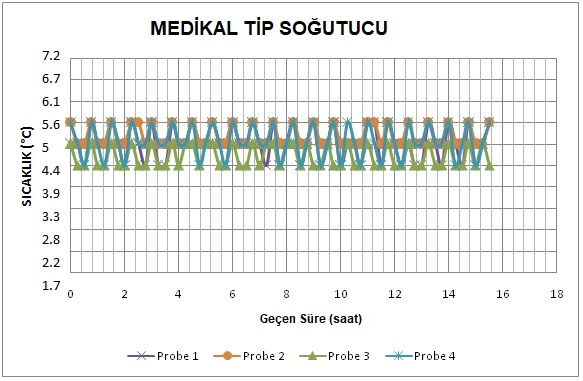
Refrigerators in the +2 to +8°C range have an automatic defrost system. Keep in mind that the internal temperature will rise during the defrost cycle. Advanced devices have multiple technologies for the automatic defrost system. This way, the internal temperature hardly changes. Effective air circulation is also required to ensure homogeneous temperature inside the device.
-20°C / -30°C Freezers:
Many biological materials can be stored at standard freezer temperatures, preferably in devices without freeze-free cycles (these cycles require short defrost periods to prevent frost accumulation (automatic defrost) and may degrade biological materials). Storage in -20ºC / -30ºC freezers is ideal for short-term storage of samples and reagents unstable at higher temperatures. Lower temperatures are recommended for storage of vaccines requiring a cold chain, DNA and RNA, and certain tissues or cells.
Combination Series:
The upper compartment maintains +2°C to +8°C, and the lower compartment maintains between -18°C and -20°C, providing dual temperatures in the same device.
-40°C and -60°C Deep Freezers:
They are suitable for long-term storage of human plasma, blood products, medicines, vaccines, certain chemicals, and products requiring cold chain applications.
-80°C and -86°C Ultra Deep Freezers:
They are suitable for long-term storage of human plasma, blood products, medicines, vaccines, certain chemicals, and products requiring cold chain applications.
-150°C and -190°C Cryogenic Deep Freezers:
Storage in cryogenic freezers is generally considered the gold standard for long-term storage of biological samples. At these extremely low temperatures, all biological activity is suspended, and no degradation occurs. Cryogenic freezing is ideal for sensitive samples and for samples that cannot be suspended in a preservative. As with ultra-low freezing, it is important to consider freezing and thawing protocols when using cryogenic storage.
Many variables play a role in determining the ideal storage temperature for biological materials. When storing valuable samples, it is important to consider the molecular structure of the sample, the preservatives or solutions in which it is suspended, and the degree of biological integrity required for future analytical or research goals.
The use of -150ºC mechanical deep freezers or -190ºC vapor or liquid phase LN2 depends on the storage requirements of the samples.
Consultation with our biological storage specialist can provide peace of mind for your irreplaceable samples.
-86 °C deep freezers and -150 °C deep freezers do not have automatic defrost features. These freezers belong to the ultra-low temperature group. They consume more energy than others, generate more noise, release more heat into the environment, and do not operate well in high ambient temperatures.
For freezers without automatic defrost, it is important to empty them once or twice a year and keep them switched off for a day to ensure long service life.
There are many brands and models of refrigerators and freezers at different prices. Once users determine the required temperature for their samples, they should also consider the following when choosing a brand or model.
What Should Be Considered When Choosing Laboratory Refrigerators and Freezers?
- Volume: Selected based on the number of samples to be stored and the space available for the device.
- Design type (upright or chest type device): Based on user preference and space limitations.
- The type and thickness of the door, inner doors (if any), and wall insulation (necessary for temperature stability).
- Temperature distribution and stability: Ensuring minimal deviation in measured temperatures at different points of the device and from the set temperature value is crucial for sample safety.
- Energy consumption of the device
- Use of environmentally friendly refrigerants (CFC-free)
- Noise level of the device: Important for personnel working in the environment where the device is located.
- Amount of heat released into the environment
- Compressor type and number
- The device's ability to operate at high ambient temperatures without requiring additional cooling equipment in the environment
- Monitoring of alarms and temperature changes: Optional features added to devices allow remote monitoring via tablet or smartphone, saving time and ensuring accurate record keeping.
Human/animal biologics: blood, tissues, cells, DNA, RNA, plasma, forensics, and fluids
Biological test materials: reagents, fluids, washes, and powders
Agricultural plant banking
Research materials: slides, powders, paraffin blocks, and test materials
Pharmaceutical R&D components
Active pharmaceutical ingredients (API), bulk drug substances, and finished therapeutics
IT and technical solutions; 24/7 visibility into inventory data, third-party data consolidation, secure and compliant audit trail reporting, flexible monitoring, web-based access. With our 21 CFR Part 11 compliant Biosecure software, hybrid and virtual storage models are also available. Our staff, processes, and technology support sample management at your facility for quality storage.
Audit trail tracking of samples and materials within our 21 CFR Part 11 compliant management system
Pioneer of Good Storage Practices (GSP)

(BSL) Biosafety Level Laboratories, Their Levels, and Equipment
2021-02-10
Journey into the World of Centrifuges: How to Choose the Right Device for Your Needs?
2026-02-23


 İstanbul Teknopark